How Many Days a Week Should Women Strength Train to Lose Fat?
If your goal is to lose body fat, build lean muscle, and create a more defined body, you may wonder how often you really need to strength train. Is twice a week enough? Will three days produce faster results? Do you need to work out five days a week to change your body?
For most women, two to four strength training sessions per week can produce excellent results. Three well planned sessions often provide the best balance between training, recovery, and a busy schedule.
The right number is not simply the highest number of workouts you can fit into one week. It is the number you can repeat consistently while getting stronger, recovering well, and supporting your training with nutrition and daily movement.
The Quick Answer
Here is a practical starting point:
- Two days per week works well for beginners, women returning after a break, and anyone with a demanding schedule.
- Three days per week is a strong choice for most women who want to lose fat, build strength, and improve body composition.
- Four days per week can benefit experienced women who recover well and want more time to focus on specific muscle groups.
- Five or more hard workouts are usually unnecessary for general fat loss and body sculpting.
More training does not automatically create better results. A clear plan performed consistently will usually outperform a demanding schedule that leaves you exhausted or causes you to skip workouts.
Why Strength Training Helps With Fat Loss
Fat loss happens when your body uses more energy than you consume over time. Strength training supports this process by helping you maintain or build muscle while losing weight.
This is important because losing weight does not always mean improving body composition. If you rely only on aggressive dieting and cardio, some of the weight you lose may come from muscle. Strength training gives your body a reason to retain lean tissue while your nutrition supports fat loss.
You may also notice positive changes before the scale moves significantly. Your clothes may fit differently, your posture may improve, and your body may appear firmer as you become stronger.
Is Two Days of Strength Training Enough?
Yes. Two well structured full body workouts per week can build strength and support fat loss, especially if you are a beginner or returning after time away from training.
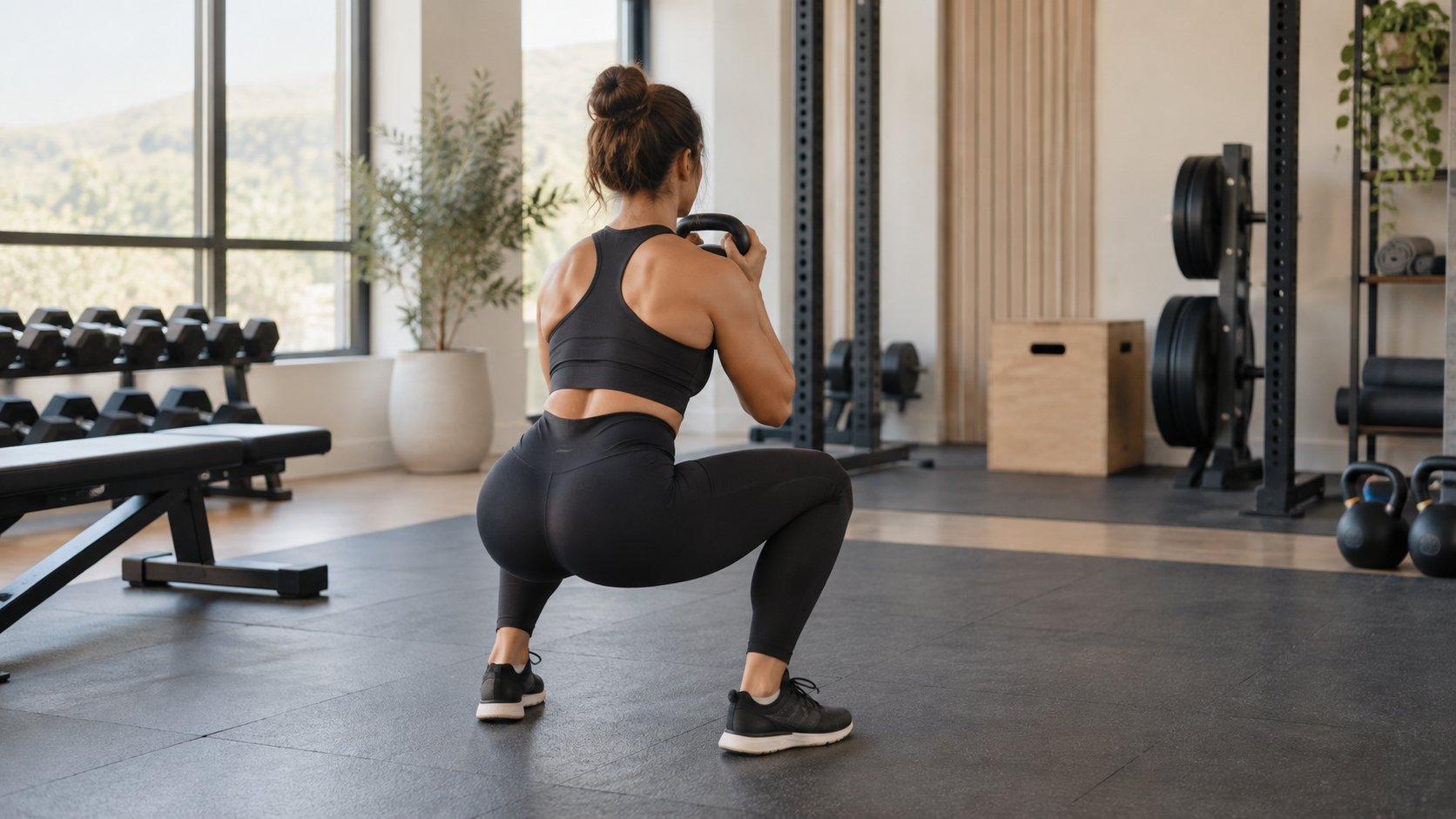
Each session should train the major movement patterns instead of focusing only on one or two areas. A complete full body workout may include:
- A squat or lunge movement
- A hip hinge such as a Romanian deadlift or hip thrust
- An upper body push
- An upper body pull
- A core stability exercise
- Short conditioning work when appropriate
Sample Two Day Schedule
Monday: Full body strength
Thursday: Full body strength
Use the other days for walking, light cardio, mobility, and recovery. Leaving time between sessions allows your muscles to recover while still training the full body twice each week.
Why Three Days Works Well for Most Women
Three strength sessions provide enough time to train the major muscle groups regularly while still leaving room for recovery, walking, cardio, work, and family responsibilities.
This frequency also gives you several programming options. You can complete three full body workouts or divide the week into lower body, upper body, and full body sessions.
Sample Three Day Schedule
Monday: Lower body and glutes
Wednesday: Upper body and core
Friday: Full body strength
The workouts should become gradually more challenging. You might add a small amount of weight, complete another repetition, improve your range of motion, or perform the exercise with better control. This process is called progressive overload, and it is one of the main reasons a structured program works better than random workouts.
When Four Days Per Week Makes Sense
Four strength sessions can work well if you have training experience, recover consistently, and want more weekly training volume. It can also allow you to complete shorter sessions by spreading your training across more days.
Sample Four Day Schedule
Monday: Lower body strength
Tuesday: Upper body strength
Thursday: Lower body strength with a glute emphasis
Saturday: Upper body strength and core
Four days is not automatically better than three. The additional session should improve your program rather than simply create more fatigue. If you feel constantly sore, your performance is declining, or workouts are becoming difficult to maintain, three days may be the better choice.
What a Structured Strength Training Program Should Include
Many women want to start building muscle but cannot tell whether a gym offers a true strength program or simply a collection of changing workouts.
A structured program should clearly explain what you are working toward, which exercises you are performing, how those exercises will progress, and how your results will be measured.
An Appropriate Starting Point
Your plan should account for your goals, experience, schedule, current strength, and any pain or movement concerns. Exercises should match your current ability and progress as your strength and confidence improve.
Repeatable Workouts
Good programs repeat important movement patterns long enough for you to improve them. Exercises can change when your needs change, but every session should not feel random.
Coaching and Technique Feedback
A coach should explain what each exercise is intended to train, provide clear technique cues, and adjust movements when needed. This is especially important if you are new to lifting or have joint concerns.
Progress Tracking
Your program should track useful information such as weights, repetitions, completed workouts, measurements, body composition, energy, and recovery. The scale can be part of the process, but it should not be the only measure of progress.
This is also what separates structured semi private coaching from a general fitness class. Members may follow the same overall training focus, but exercise selection, weight, range of motion, and progression should still be adjusted for the individual.
Use cardio to support your plan
Cardio can improve fitness and increase weekly energy expenditure, but it should not replace strength training. Choose an activity you enjoy and can recover from, such as brisk walking, cycling, hiking or short conditioning sessions.
More cardio is not automatically better if it leaves you too tired to train well or makes your hunger difficult to manage.
How Cardio and Walking Fit Into Your Week
You do not have to choose between strength training and cardio. Strength training helps build and preserve muscle. Cardio improves cardiovascular fitness and can increase weekly energy expenditure. Walking adds movement without creating much additional fatigue for most people.
A practical week might include three strength sessions, regular walking, and one or two short cardio sessions. If fat loss stalls, review your nutrition, daily movement, recovery, and workout progression before automatically adding more intense exercise.
Nutrition Still Matters
Strength training can reshape your body, but exercise alone does not guarantee fat loss. You still need a consistent and manageable calorie deficit.
Eat enough to support your workouts while keeping your portions aligned with your goal. Prioritize protein at meals, include high fiber foods, drink enough water, and aim for consistency throughout the week. Extreme restriction can make hunger, recovery, and workout performance harder to manage.
Frequently Asked Questions
Can women lose fat by strength training twice a week?
Yes. Two full body strength sessions can support fat loss and muscle retention when combined with appropriate nutrition and regular daily movement. Both workouts should train the major muscle groups and become gradually more challenging.
Is three days of strength training enough to tone the body?
Three days is enough for many women to build muscle and improve definition. Toning comes from developing muscle and reducing enough body fat for that muscle to become more visible.
Should women lift heavy weights to lose fat?
Use resistance that feels challenging while still allowing controlled technique. Heavy is relative to the person and the exercise. You do not need to test your maximum strength, but the final repetitions of each working set should require meaningful effort.
How long should a strength workout last?
Many effective workouts can be completed in 45 to 60 minutes. A focused 45 minute session can be more productive than a longer workout filled with unnecessary exercises.
Can strength training reduce belly fat?
Strength training can support overall fat loss and improve body composition, but it cannot target fat loss from one specific area. Nutrition, daily movement, sleep, stress, genetics, and consistency all influence your results.
How soon will I see results?
You may notice improvements in strength, technique, and energy within the first several weeks. Visible changes usually take longer and depend on your starting point, nutrition, recovery, and consistency.
Is semi private strength training the same as a fitness class?
Not always. A general class often gives everyone the same workout. Structured semi private training should include coaching, individual exercise adjustments, performance tracking, and a progression plan.
Ready for a Structured Strength Training Plan?
If you want to lose body fat, build strength, and create a leaner, more defined body, you do not need more random workouts. You need a plan that matches your goals, schedule, experience, and ability to recover.
BodyFit Coaching helps busy women in Denver through private personal training, semi private coaching, and online fitness coaching. Your program includes personalized workouts, progress tracking, nutrition guidance, and ongoing accountability.
Schedule your consultation with BodyFit Coaching and take the first step toward a stronger, leaner, and more confident body.
What’s new at Bodyfit Coaching? Follow us on instagram