Body Recomposition for Women: How to Lose Fat and Build Lean Muscle
Many women begin their fitness journey with one goal in mind: lose weight. But losing weight is not always the same as creating the body composition you want.
You may see the number on the scale go down without feeling noticeably stronger or more defined. You might also train consistently, feel your clothes fitting better, and look leaner even though your weight has barely changed.
This is where body recomposition becomes important.
Body recomposition focuses on improving the ratio of muscle to body fat. Instead of making weight loss the only goal, the objective is to reduce body fat while building or preserving lean muscle.
For many women, especially those over 30, this is a more productive and sustainable approach than repeatedly following restrictive diets or relying entirely on cardio.
What Is Body Recomposition?
Body recomposition means changing what your body is made of.
Your total body weight includes muscle, fat, water, bones, organs, and other tissues. A traditional weight loss plan only measures whether your total weight is decreasing. It does not tell you how much of that change came from fat, muscle, or water.
A body recomposition program has two connected goals:
- Reduce excess body fat
- Build or preserve lean muscle
When both happen successfully, you can become leaner and more defined without experiencing a dramatic change on the scale.
For example, a woman could lose five pounds of fat and gain three pounds of muscle. The scale would only show a two-pound change, but her waist measurement, strength, posture, and overall appearance could improve significantly.
That is why scale weight should be treated as one measurement rather than the complete definition of progress.
Why Body Recomposition Is Different From Weight Loss
Traditional weight loss is usually achieved by consuming fewer calories than the body uses. This creates a calorie deficit.
However, an aggressive calorie deficit without sufficient protein or strength training can cause the body to lose muscle along with fat. You may weigh less, but you may not achieve the firm, strong, and sculpted appearance you expected.
Body recomposition takes a more complete approach.
The goal is to give your body a reason to preserve or build muscle while gradually reducing fat. This requires an effective strength-training stimulus, supportive nutrition, adequate recovery, and consistency.
Research supports this approach. A systematic review found that resistance exercise during dietary weight loss helped preserve fat-free mass while contributing to fat loss. BMJ Open Sport & Exercise Medicine
Why Strength Training Matters for Women
Strength training is the foundation of an effective body recomposition program.
Your muscles adapt when they are challenged beyond what they are currently used to doing. Over time, gradually increasing the resistance, repetitions, control, or difficulty of an exercise encourages the body to become stronger and build lean tissue.
This process is known as progressive overload.
Strength training can help women:
- Build and preserve lean muscle
- Improve strength and physical ability
- Create more visible muscle definition
- Support healthier body composition
- Improve bone strength
- Maintain better balance and stability
- Feel more capable in everyday life
Women also respond very well to resistance training. A systematic review found that women and men experience similar relative increases in muscle size and lower-body strength when following resistance-training programs. PubMed
You do not need to train like a bodybuilder to benefit. A well-designed program based on your experience, mobility, goals, and schedule can produce meaningful results.
Will Lifting Weights Make Women Bulky?
This is one of the most common concerns I hear from women beginning strength training.
For most women, lifting weights does not suddenly create a bulky appearance. Significant muscle growth requires consistent progressive training, sufficient nutrition, time, and often a very deliberate muscle-building strategy.
The more common result of strength training is a stronger and more defined physique.
What many people describe as looking “toned” is generally a combination of two things:
- Developing enough muscle to create visible shape
- Reducing enough body fat for that shape to become noticeable
Doing endless light repetitions without progressively challenging the muscles may not provide enough stimulus to produce that change. Women should not be afraid of gradually lifting heavier weights with proper technique.
Is Body Recomposition Harder After 30?
Turning 30 does not suddenly prevent you from losing fat or building muscle.
However, life often becomes more demanding during this stage. Work responsibilities, parenting, stress, reduced sleep, inconsistent meals, and less daily movement can make progress feel more difficult.
Some women respond by eating as little as possible and adding more cardio. This may produce temporary scale loss, but it can also be difficult to maintain and may not support muscle retention.
A more effective strategy is to focus on the habits that influence body composition:
- Consistent strength training
- Adequate protein
- Appropriate calorie intake
- Regular daily movement
- Quality sleep
- Stress management
- A program that progresses over time
Exercise research involving postmenopausal women found that training improved several measures of body composition. Resistance and combined training were especially beneficial for muscle-related outcomes. PubMed
The best program is not necessarily the most intense one. It is the program you can perform consistently, recover from, and gradually improve.
The Four Foundations of Female Body Recomposition
1. Follow a Structured Strength-Training Program
Random workouts can make you tired, but fatigue alone does not guarantee progress.
An effective program should include fundamental movement patterns such as:
- Squats and lunges
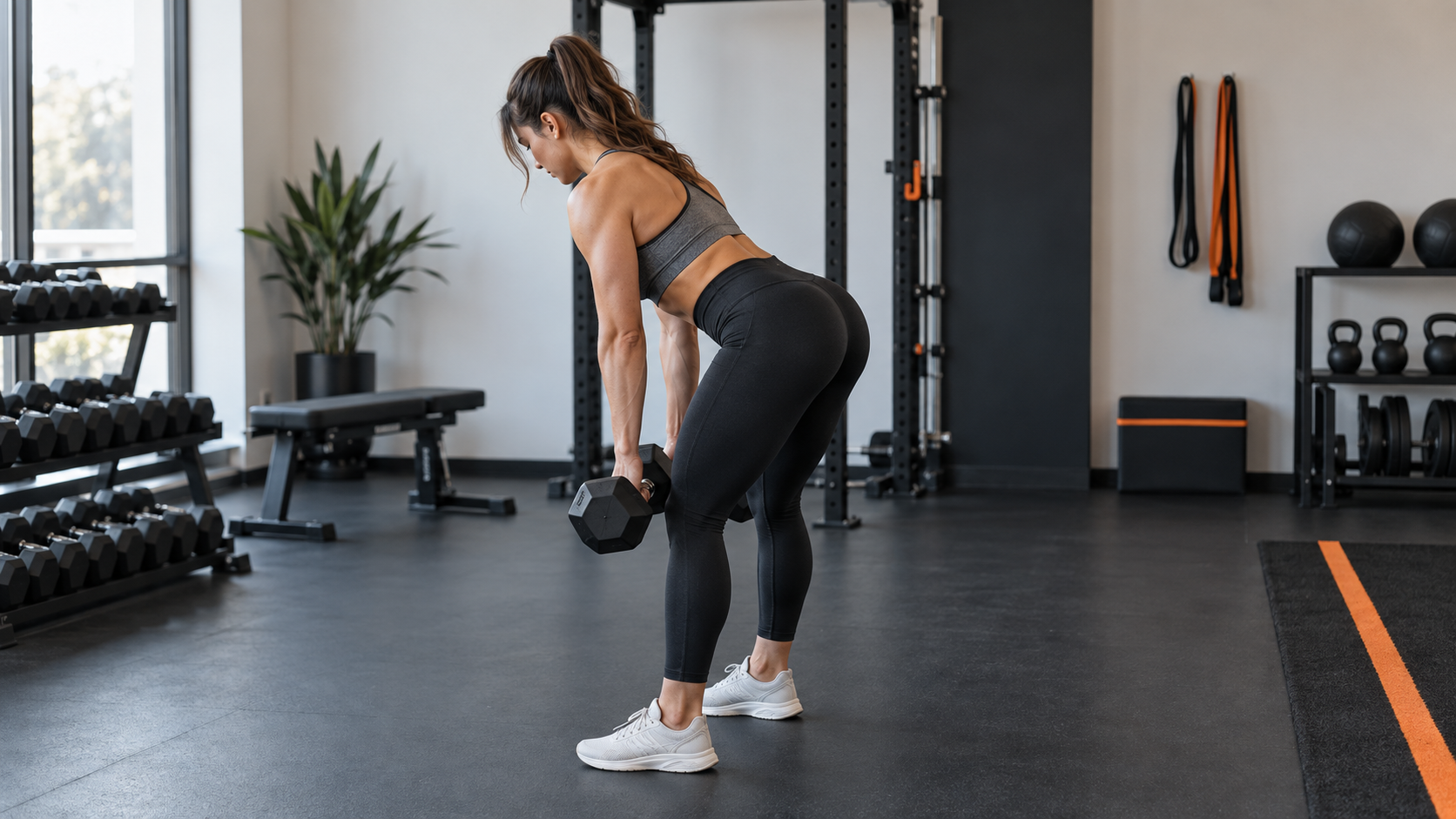
- Hip hinges
- Upper-body pushing
- Upper-body pulling
- Glute-focused movements
- Core stability exercises
- Loaded carries when appropriate
Your program should also provide a clear method of progression. That could mean adding weight, completing more repetitions, improving your range of motion, or performing an exercise with greater control.
Most women do not need to perform a completely different workout every day. Repeating important movements gives you an opportunity to develop proper technique and measure improvement.
2. Eat Enough Protein
Protein provides amino acids that help the body repair and build muscle tissue.
Consuming sufficient protein becomes especially important when you are trying to lose fat because it can support muscle retention. A 2024 systematic review found that increased protein intake helped adults with overweight or obesity preserve muscle mass during weight loss. PubMed
Rather than relying on one large serving at dinner, try to include a quality protein source throughout the day.
Examples include:
- Chicken or turkey
- Fish and seafood
- Eggs
- Greek yogurt
- Cottage cheese
- Lean beef
- Beans and lentils
- Tofu or tempeh
- Protein powder when convenient
Your ideal intake depends on your body size, activity level, health, and goals. A personalized nutrition plan can help determine an appropriate target.
3. Use a Moderate and Sustainable Calorie Deficit
Fat loss requires your body to use more energy than it consumes over time. However, that does not mean you should eat as little as possible.
A very aggressive calorie deficit can make training performance, recovery, energy, and consistency more difficult. It can also increase the risk of losing lean tissue during weight loss.
For many women, a moderate calorie deficit is more appropriate. It allows fat loss to occur while still providing enough energy to train, recover, and function well.
Women who are new to strength training or returning after a long break may sometimes build muscle while losing fat. More experienced lifters may need to use distinct fat-loss and muscle-building phases to continue progressing.
4. Prioritize Recovery and Daily Movement
Your workout creates the stimulus for change, but recovery allows your body to adapt.
Sleep, stress, nutrition, and rest days all affect your ability to train consistently. More exercise is not always better if your body cannot recover from it.
Daily movement also matters. Walking is a simple way to increase activity without adding excessive training fatigue. For busy women in Denver, this might include walking through the neighborhood, taking a lunchtime walk, using local trails, or adding short movement breaks throughout the workday.
Strength training and walking can complement each other well. One builds strength and lean muscle, while the other helps support activity, cardiovascular health, and energy expenditure.
How Often Should Women Strength Train for Body Recomposition?
A good starting point for many women is two to four strength-training sessions per week.
The right frequency depends on:
- Your current fitness level
- Your training experience
- Your schedule
- The length and intensity of each workout
- Your ability to recover
- Your specific body-composition goals
Two well-structured weekly sessions can be valuable for a beginner. Three sessions may provide additional opportunities to practice key movements and distribute training volume throughout the week.
Consistency matters more than choosing a schedule that looks impressive but cannot be maintained.
How Long Does Body Recomposition Take?
Body recomposition is a gradual process.
Some improvements can appear relatively quickly. You may notice increased energy, better exercise technique, or improved strength within the first few weeks. Visible changes in muscle definition and body fat typically require more time.
Your rate of progress will depend on your starting point, nutrition, training experience, sleep, stress, genetics, and consistency.
Instead of judging the entire process by a single weigh-in, track several indicators:
- Progress photos
- Waist, hip, arm, and thigh measurements
- Body-fat and muscle-mass estimates
- How your clothes fit
- Strength improvements
- Workout performance
- Energy and confidence
- Average weekly body weight
Body-composition measurements are estimates and can fluctuate, so they are most useful when taken under similar conditions and evaluated as trends.
Common Body-Recomposition Mistakes
Relying Only on Cardio
Cardio can support your health and increase energy expenditure, but it does not replace progressive resistance training when your goal includes building muscle and creating definition.
Eating Too Little
Extreme restriction may produce rapid scale changes, but it can make your results harder to sustain and your workouts more difficult to progress.
Changing Workouts Constantly
Muscle and strength development require repeated exposure to important exercises. If your program changes every session, it becomes difficult to measure whether you are actually improving.
Avoiding Heavier Weights
Your muscles need an appropriate challenge. Good form comes first, but the resistance should eventually progress as you become stronger.
Measuring Progress Only With the Scale
Your scale cannot distinguish between fat, muscle, water, and normal daily fluctuations. Use multiple measurements to see the complete picture.
Expecting Perfect Consistency
You do not need perfect workouts, perfect nutrition, or perfect weeks. You need enough consistency over time to create a measurable trend.
What a Good Body-Recomposition Workout Looks Like
A well-designed full-body session might include:
- A squat or lunge variation
- A hip hinge or glute exercise
- An upper-body push
- An upper-body pull
- A core stability movement
- A short conditioning component when appropriate
The exact exercises should match your current abilities. A beginner may start with goblet squats, dumbbell Romanian deadlifts, supported rows, and incline push-ups. A more experienced client may use barbells, heavier dumbbells, unilateral exercises, and more advanced progressions.
The goal is not to copy someone else’s workout. The goal is to follow a program that challenges you safely and progresses with you.
Body Recomposition for Busy Women in Denver
A demanding schedule does not mean you need to abandon your goals.
Many women can make meaningful progress with two or three focused strength sessions per week, supportive nutrition habits, regular walking, and a clear plan.
At BodyFit Coaching, we help busy Denver women lose body fat, build strength, and create a leaner, more defined physique without relying on extreme diets or random workouts.
Our coaching combines personalized strength training, body-composition tracking, nutrition guidance, and ongoing accountability. Programs are adjusted to your fitness level, schedule, and individual goals.
Whether you are new to strength training, returning after time away, or frustrated by a lack of progress, the right structure can help you move forward with greater confidence.
Ready to Begin Your Body-Recomposition Journey?
You do not need another short-term challenge that leaves you starting over.
You need a strength-training and nutrition strategy that fits your body, lifestyle, and goals.
BodyFit Coaching provides personal training for women in Denver from our private studio in North Capitol Hill. We work with clients from Cherry Creek, Washington Park, LoHi, Uptown, the Highlands, and surrounding Denver neighborhoods.
Start your transformation with a personalized consultation.
What’s new at Bodyfit Coaching? Follow us on instagram